
This shift is not driven by style alone. It reflects practical decisions made by designers, builders, landlords and operators who want predictable outcomes, lower risk after handover, and finishes that hold up in real conditions.
A decade ago, indoor greenery was often added late in a project, sometimes as loose pot plants or small living walls. Maintenance was assumed to be manageable, and performance expectations were low. That approach no longer holds.
Commercial briefs today place more weight on durability, maintenance responsibility and long-term appearance. Many tenants want a space that looks the same on day one as it does two or three years later. Landlords want finishes that do not create ongoing issues between leases. Designers are under pressure to specify elements that will not fail once the project is handed over.
Living green walls struggle under those conditions. They require irrigation, drainage, regular horticultural care and ongoing access. When any part of that system breaks down, the wall degrades fast. Artificial systems remove most of those variables.
Brisbane’s climate plays a big role in this change. Heat, humidity and heavy rainfall can be hard on both living plants and the infrastructure that supports them. In enclosed commercial spaces, inconsistent natural light adds another layer of complexity. Many tenancies sit deep within shopping centres or office floors where sunlight is limited or uneven.
Water access is another issue. Not all commercial fit-outs can support irrigation lines or drainage without extra cost and approvals. In some buildings, installing a living wall means negotiating with centre management, body corporates or base building services. That process can delay projects or rule out greenery altogether.
Artificial green walls bypass these issues. They do not need water, soil or drainage. They perform the same under artificial lighting as they do near windows. For projects working to tight timelines and fixed budgets, that reliability matters.
This change is visible across many types of Brisbane commercial spaces.
In retail fit-outs, artificial green walls are often used as feature backdrops behind shelving, counters or signage. They add texture without interfering with stock displays or customer flow. Because the panels are fixed, there is no risk of plants being knocked over or damaged in busy environments.
Offices use artificial greenery in reception areas, meeting rooms and breakout zones. These areas benefit from a softer visual finish, but they are rarely the right place for high-maintenance planting. Artificial panels offer a stable solution that does not rely on staff or external contractors for upkeep.
Hospitality venues, particularly those with semi-outdoor areas, are also using artificial green walls more often. They act as privacy screens, wall finishes or ceiling features without the risk of plant loss during heatwaves or storms.
Across all these settings, the common thread is control. Artificial systems allow project teams to lock in a finished look and trust that it will stay that way.
The benefits of artificial green walls are practical rather than decorative.
They remove ongoing maintenance obligations. There is no watering, trimming or replacement of dead plants. Cleaning usually involves light dusting or washing at set intervals.
They provide consistency. Artificial panels do not grow unevenly, change colour seasonally or thin out over time. This is especially useful for multi-site retail or office rollouts where consistency matters.
They reduce risk after handover. Living walls often fail months after installation, when maintenance routines slip or conditions change. Artificial walls avoid this problem, making them easier to sign off at project completion.
They are flexible to install. Panels can be cut, shaped and installed around joinery, lighting and signage. This makes them easier to integrate into complex wall designs than many living systems.
These advantages explain why artificial green walls are becoming standard in many commercial specifications.
As artificial green walls have become more common, the quality of panels has improved. Not all products are equal, and commercial projects need panels that look acceptable at close range and perform over time.
Trade Project Services works with suppliers that understand these requirements. One of these is Leaf and Repeat, who supply artificial green wall panels suited to commercial use. Their range includes varied foliage styles and panel formats that work across offices, shops and hospitality spaces.
You can view their full panel collection here:
https://www.leafandrepeat.com.au/collections/all
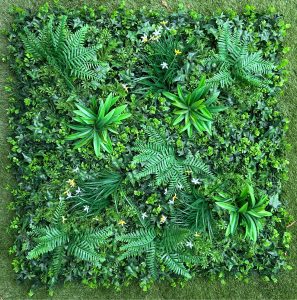
Sourcing panels from a consistent supplier helps maintain quality across projects. It also simplifies installation planning, as panel sizes, fixings and finishes remain predictable. For builders and project managers, this reduces on-site adjustments and delays.
Design and Installation Considerations
Artificial green walls still require planning. While they remove many issues linked to living systems, poor design or installation can undermine the result.
Lighting should be considered early. Artificial foliage can look flat or unnatural under harsh or uneven lighting. Coordinating panel placement with lighting design improves depth and texture.
Access for cleaning matters. High walls or double-height spaces look effective, but they need safe access for maintenance. Planning this upfront avoids issues later.
Outdoor exposure should be assessed carefully. Panels used outdoors or in semi-outdoor areas should be UV stabilised and fixed securely to handle wind and weather.
Integration with other finishes is important. Artificial greenery works best when paired with materials like timber, concrete or muted wall finishes. Overuse or poor placement can make it feel decorative rather than architectural.
These are practical details, but they are often what separates a successful installation from a disappointing one.
The move toward artificial green walls in Brisbane’s commercial spaces reflects broader changes in how projects are delivered. Reliability, consistency and reduced post-handover risk now carry more weight than novelty.
Artificial systems meet these priorities. They allow designers to include greenery without adding complexity. They help builders meet deadlines. They give tenants a space that stays presentable with minimal effort.
This does not mean living plants have no place. In some settings, they still work well. But for many commercial and retail projects, artificial green walls offer a better fit.
The shift is already well underway. Based on current project briefs and site conditions, it is unlikely to reverse anytime soon.